Welcome to FEAR 2026
The Third International Workshop on Formal Ethical Agents and Robots (FEAR) will be held on 3 November 2026 with co-located tutorial scheduled for 2 November 2026 both at the Kilburn Building, the University of Manchester, UK.
Overview
Recent advances in artificial intelligence have led to a range of concerns about the ethical impact of the technology. This includes concerns about the day-to-day behaviour of robotic systems that will interact with humans in workplaces, homes and hospitals. One of the themes of these concerns is the need for such systems to take ethics into account when reasoning. This has generated new interest in how we can specify, implement and validate ethical reasoning. The aim of this workshop would be to look at formal approaches to these questions. Topics of interest include but are not limited to:
- Logics for morality and ethics
- Knowledge representation of ethical theories and ethically salient information
- Computational modelling of morality and ethics
- Specification of ethical reasoning and behaviour
- Verification of ethical reasoning and behaviour
- Formal modelling of ethical accountability
Schedule and Location
This year we will hold a free one-day workshop with informal proceedings, consisting of short talks and opportunities for discussion, and a free one-day tutorial that engages conversation in the state-of-the-art machine ethics fields. FEAR will be a hybrid meeting, supporting both virtual and in-person attendance. We strongly encourage in-person attendance. Registration is free, but required via this link.
Keynote Speaker
Starting from a recently introduced formal framework for operationalising social, legal, ethical, empathetic and cultural (SLEEC) norms for autonomous agents, this keynote asks how we can ensure that normative compliance is maintained when the agents face real-world uncertainty. Two approaches to addressing different aspects of this challenge will be presented. The former approach, SLEEC-ADAPT, uses dynamic workflow reconfiguration to adapt the behaviour of an agent at runtime as it encounters users with different SLEEC requirements. The latter, SLEEC-FIASCO, is a design-time methodology that uses a combination of formal analysis and generative AI to systematically determine SLEEC-relevant disruptions and associated mitigations for an autonomous agent under development. Together, they provide an initial foundation for achieving resilient normative alignment in real-world deployments.
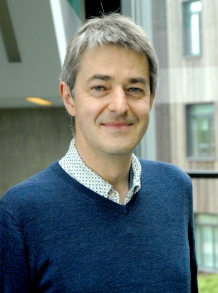
Radu Calinescu is Professor of Computer Science at the University of York, UK, where he leads a research team developing theory and tools for the modelling, verification, synthesis, and assurance of self-adaptive, autonomous, and AI systems. A central focus of his recent work is the operationalisation of normative requirements for autonomous agents. He has published over 200 research papers in the areas of software engineering, formal methods, and probabilistic modelling. He has served as a Program Co-Chair for international conferences including ICECCS, SEFM, SEAMS, ICSA, and ICPE, and is an Associate Editor for ACM Computing Surveys and ACM Transactions on Autonomous and Adaptive Systems.
TBA
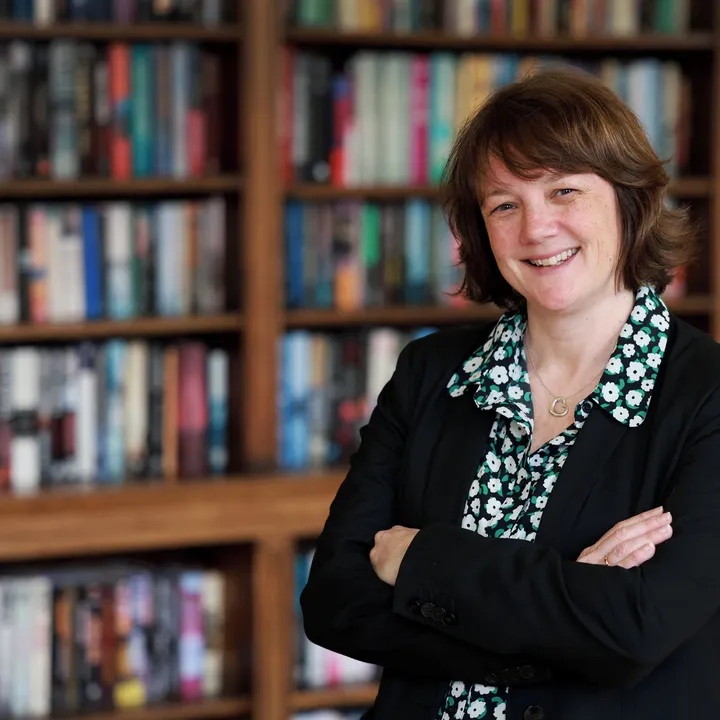
Katie is Professor of Computer Science, Associate Pro-Vice-Chancellor and Director of the Interdisciplinary Centre for Sustainability Research at the University of Liverpool. She has been conducting foundational and interdisciplinary research on artificial intelligence for over 20 years, with my key areas of research being in the fields of computational models of argument and AI & Law. As Professor of Computer Science, She has published over two hundred articles in peer-reviewed conference proceedings and journals, and have also applied my work in a variety of industrial projects. Her current research is focussed on explainable AI and interdisciplinary applications of this. She develops explainable AI for modelling legal reasoning and also work on projects to bring symbolic AI to the task of digitally-supported materials discovery. She is a member of the leadership team for the UKRI-funded AIchemy hub, supporting adoption of AI for chemistry across the UK. In 2016-2017 she served as President of the International Association for AI and Law, and since 2020 she has served as a member of the Lawtech UK Panel, a government-backed initiative to help transform the UK legal sector through technology.
Submission Information
We will accept two types of paper prepared using the EPTCS LaTeX style.
- Regular papers describing completed research (up to 16 pages in length).
- Abstracts providing a high-level description of some research published (or submitted/intended for publication) elsewhere (up to 2 pages in length).
Papers should be submitted using OpenReview. The paper type should be included as part of the paper title. Reviews will be single-blind. Please note that OpenReview can take up to two weeks to approve a new profile registration that does not contain an institution email address.
We intend to host informal workshop proceedings on OpenReview.
Important Dates
- Submission Deadline: Monday, 17th of August 2026, 11:59 UTC-0
- Notification: Monday, 14th of September 2026
- Workshop: Tuesday, 3rd of November 2026
Program Chair
Program Committee
- Kevin Baum, German Research Center for AI (DFKI)
- Joe Collenette, University of Chester
- Aleks Knoks, University of Luxembourg
- Vivek Nallur, University College Dublin
- Luca Pasetto, University of Luxembourg
- Dieter Vanderelst, University of Cincinnati
- Gleifer Vaz Alves, Federal University of Technology - Paraná
- Andrea Vestrucci, University of Bamberg
- Ajay Vishwanath, University of Bergen